Bilateral hip replacement is a surgical procedure in which both hip joints are replaced with prosthetic implants to reduce pain and restore mobility. This surgery is often necessary for individuals with severe osteoarthritis, rheumatoid arthritis, or traumatic injuries that cause major damage to the hip joints. There are two methods for bilateral hip replacement: simultaneous, where both hips are replaced in one operation, and staged, where each hip is replaced in separate surgeries, usually weeks or months apart.
The simultaneous approach offers the benefit of a single recovery period, which can lower hospital stays and overall rehab time. However, it also involves a higher risk of complications because of the longer surgery and greater physical stress. Staged procedures may be safer for patients with underlying health issues, as they allow the body to recover between surgeries but extend the total recovery period. The choice between simultaneous and staged bilateral hip replacement depends on the patient's overall health, age, and the extent of hip damage.
After surgery, physical therapy is essential for rebuilding strength, flexibility, and balance. Most patients experience notable improvements in pain relief, joint function, and quality of life, although recovery can take several months. Like any major surgery, risks include infection, blood clots, and implant loosening over time.
 People who undergo bilateral hip replacement often experience:
Chronic Pain: Persistent pain in both hips, even at rest or during simple activities.
Stiffness: Difficulty moving or rotating the hips.
Reduced Mobility: Trouble walking, climbing stairs, or standing for long periods.
Swelling: Swelling in the hip area.
Limping: Noticeable limping due to uneven weight distribution or discomfort.
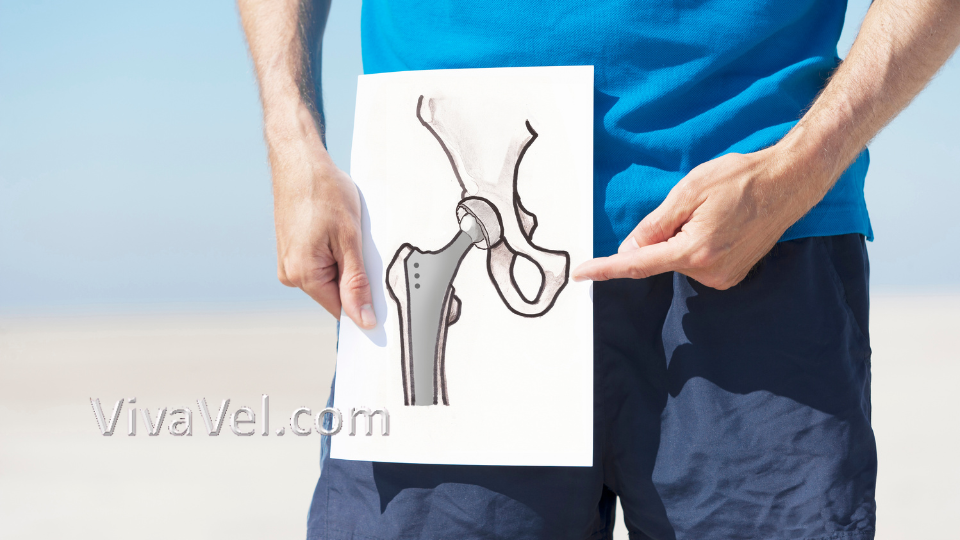
The main reasons for needing a bilateral hip replacement include:
Osteoarthritis: The most common cause, leading to the wear and tear of the joint.
Rheumatoid Arthritis: An autoimmune condition that causes joint inflammation and damage.
Avascular Necrosis: Reduced blood supply resulting in bone death.
Injuries or Fractures: Severe hip fractures that damage the joint.
Developmental Hip Dysplasia: Malformation of the hip joint.
You should consult a doctor if:
Hip pain is interfering with daily activities.
Pain persists despite medication or physical therapy.
Hip stiffness limits your ability to walk or move.
You experience worsening hip joint deformity or posture issues.
Certain factors may increase the likelihood of needing bilateral hip replacement:
Age: Older adults are more prone to joint degeneration.
Obesity: Excess weight puts more stress on hip joints.
Genetics: A family history of arthritis or hip problems.
High-impact activities, such as running or jumping, can increase hip wear.
Injuries: Past trauma to the hips can accelerate joint deterioration.
Before recommending a bilateral hip replacement, doctors use several diagnostic methods:
Physical Examination: Assessing range of motion, strength, and pain levels.
X-rays: To detect joint damage, bone deformities, or narrowing of joint spaces.
MRI or CT Scans: To get detailed images of soft tissues, bones, and cartilage.
Blood Tests: To check for infections or autoimmune conditions, such as rheumatoid arthritis.
Do's:
Follow your physical therapy plan to improve mobility and flexibility.
Use assistive devices such as a walker or crutches initially.
Keep the surgical area clean and dry to prevent infections.
Eat a balanced diet to promote healing.
Don'ts:
Avoid crossing your legs or sitting too low for the first few weeks.
Don't engage in high-impact sports like running, jumping, or skiing.
Avoid bending over excessively to prevent dislocating the new joint.
Don't lift heavy objects until fully healed.
Disclaimer:
Our medical content authors have diligently gathered and synthesized information on this topic to offer valuable insights to our readers. Drawing from a range of reputable medical journals and health resources, this content aims to enhance understanding of the subject. It's essential to remember that while this information is informative, it should not replace personalized consultation or treatment from a qualified healthcare professional. For further details, please refer to our Editorial Policy.
For this topic, our authors used some of the following resources:
National Institutes of Health (.gov) | Bilateral Hip Arthroplasty
Johns Hopkins Medicine | Hip Replacement Surgery
ScienceDirect.com | Original article One-stage bilateral total hip arthroplasty
Frontiers | One-stage vs. two-stage bilateral total hip arthroplasty
.png)
Saba holds a Master’s degree in Pharmacy from Jamia Hamdard University, New Delhi and possesses a deep understanding of medical subjects. She is an experienced teacher and is passionate about health education. She has a remarkable talent for transforming complex medical concepts into engaging, accurate, and impactful content to inspire healthier living. With a deep scientific understanding and thorough research, Saba consistently supports her writings with the latest publications, ensuring accuracy and relevance.
.png)
Oruge is committed to promoting health awareness through clear, research-based communication. With a background in microbiology and public health, she combines scientific accuracy with an engaging writing style to simplify complex medical topics. At VivaVel Health, she contributes insightful reviews, articles, and blogs that empower readers to make informed decisions for healthier living.




 BLK-MAX Super Specialty Hospital
 Pusa Road, Radha Soami Satsang, Rajendra Place New Delhi, 110005 India
 Accord Superspeciality Hospital
Budena Village, Sector 86, Faridabad, Haryana 121002, India
 SHALBY Sanar International Hospitals, Gurugram
Golf Course Rd, Parsvnath Exotica, DLF Phase 5, Sector 53, Gurugram, Haryana Gurgaon, 122022 India
 PARAS Health, Gurugram
C-1, Sushant Lok- 1, Sector-43, Phase- I, Gurugram, Haryana, 122002

 Dr. Rakesh Kumar
 Director – Orthopedics And Joint Repla...
 Joint Replacement Surgeon
 19 Years Experience
 Accord Superspeciality Hospital
Dr. Rakesh Kumar is an esteemed Orthopaedic and Joint Replacement Specialist with over 19 years of extensive experience in the field. With more than 13 years dedicate...
 Book Consultation
 Dr. Yuvraj KumarChairman
Orthopedics And Joint Replacement Surgeo...
24 Years ExperienceAccord Superspeciality Hospital
Dr. Yuvraj KumarChairman
Orthopedics And Joint Replacement Surgeo...
24 Years ExperienceAccord Superspeciality Hospital
Dr. Yuvraj Kumar has vast experience in joint replacement and spine surgery. He specializes in treating conditions related to the musculoskeletal system, including disorders ...
Book Consultation
 Dr. Vikash KapoorVice Chairman & Group Director – Ortho...
Orthopedic Sciences, Robotic Surgery
25 Years ExperienceManipal Hospital (E.M. Bypass), Kolkata
Dr. Vikash KapoorVice Chairman & Group Director – Ortho...
Orthopedic Sciences, Robotic Surgery
25 Years ExperienceManipal Hospital (E.M. Bypass), Kolkata
Dr. Vikash Kapoor is a distinguished Senior Consultant Orthopedic Surgeon with an extensive track record of over 8,000 successful orthopedic procedures. He serves as ...
Book Consultation
 Dr. Saif N ShahDirector
Orthopedic And Joint Replacement Surgeon
17 Years ExperienceMedanta Super Speciality Hospital, Lucknow
Dr. Saif N ShahDirector
Orthopedic And Joint Replacement Surgeon
17 Years ExperienceMedanta Super Speciality Hospital, Lucknow
Dr. Saif Nabi Shah is a highly skilled Orthopedic and Joint Replacement Surgeon with 17 years of experience in the field. He specializes in complex intra-articular is...
Book Consultation
 Dr. Dharmendra SinghDirector
Orthopedic And Joint Replacement Surgeon
27 Years ExperienceMedanta Super Speciality Hospital, Lucknow
Dr. Dharmendra SinghDirector
Orthopedic And Joint Replacement Surgeon
27 Years ExperienceMedanta Super Speciality Hospital, Lucknow
Dr. Dharmendra Singh is a highly skilled orthopedic surgeon and Director of the Institute of Musculoskeletal Disorders and Orthopedics at Medanta Lucknow. Before his ...
Book Consultation
 Dr. Rajiv ChatterjeeSenior Consultant & Faculty – DNB Orth...
Dislocation, Lower Back Pain, Orthopedic...
32 Years ExperienceManipal Hospital (E.M. Bypass), Kolkata
Dr. Rajiv ChatterjeeSenior Consultant & Faculty – DNB Orth...
Dislocation, Lower Back Pain, Orthopedic...
32 Years ExperienceManipal Hospital (E.M. Bypass), Kolkata
Dr. Rajiv Chatterjee is a distinguished Orthopedic Surgeon with over 32 years of experience practicing in Kolkata. He specializes in various surgical procedures,...
Book Consultation
Treatment Plan & Cost within 2 days















 IVF Treatments
 Bangkok Hospital
 Dr. Tawisak Labchitkuson