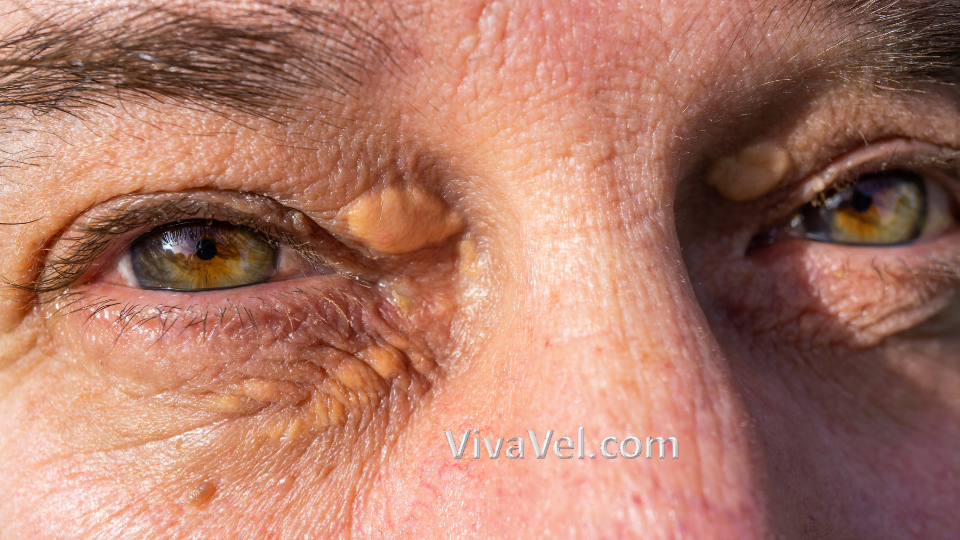
Xanthelasma is a condition characterized by the development of yellowish, flat, or slightly raised patches on the skin around the eyes, especially on the eyelids. These patches contain fatty deposits and are usually soft. Although xanthelasma is generally harmless and causes no physical discomfort, its appearance can be upsetting for many individuals. Xanthelasma may signal an underlying health issue, such as high cholesterol or other lipid imbalances. It is more common in people with high cholesterol, diabetes, or certain liver conditions. As a result, healthcare providers may recommend cholesterol screening when xanthelasma is observed.
While the condition itself is not dangerous, its presence may indicate a higher risk of heart disease, highlighting the need for medical evaluation. Treatment usually focuses on addressing the underlying health problem. The patches can be removed through laser therapy, surgery, or chemical treatments, especially if cosmetic improvement is desired. Maintaining a healthy diet, exercising regularly, and managing cholesterol levels effectively can help lower the risk of developing xanthelasma. If you notice yellowish patches around your eyes, consulting a healthcare professional is recommended. Early diagnosis and treatment can prevent further health issues and improve skin appearance.
Appearance: Yellow, flat, or slightly raised patches, usually on or around the eyelids.
Texture: Soft or firm, with a smooth surface.
Location: Generally found near the inner corners of the upper and lower eyelids.
Pain: Typically painless and non-itchy.
High Cholesterol Levels: Xanthelasma is commonly associated with high LDL ("bad") cholesterol and low HDL ("good") cholesterol.
Genetic Predisposition: It can run in families, even in individuals with normal cholesterol levels.
Underlying Health Conditions: Diabetes, liver disease, and other metabolic disorders can contribute to the development of xanthelasma.
Age: More common in individuals above 40 years of age.
Gender: Slightly more common in women than men.
 Please remember to take note of the following:
If you observe that the patches on your skin are growing rapidly, or if there are changes in their colour or texture.
If the condition is causing you emotional distress or affecting your appearance in a way that is distressing.
If you have a family history of high cholesterol or heart disease, this may be relevant to your current condition.
If you notice any other symptoms, such as vision problems or pain around the affected area, it's essential to seek medical attention.
High Cholesterol: Elevated levels of LDL (low-density lipoprotein) and triglycerides can lead to the buildup of plaque in the arteries, increasing the risk of heart disease and stroke.
Cardiovascular Diseases: Xanthelasma, the yellowish cholesterol deposits around the eyes, can serve as a visible sign of a heightened susceptibility to heart diseases and other cardiovascular issues.
Metabolic Disorders: Conditions such as diabetes and other health disorders that disrupt the body's ability to process and regulate lipids and glucose levels, potentially leading to various complications.
Lifestyle Factors: Unhealthy eating habits, sedentary lifestyle, smoking, and excessive alcohol consumption, all of which can significantly contribute to the development of high cholesterol, cardiovascular problems, and metabolic disorders.
Physical Examination: A doctor can usually diagnose xanthelasma by visual inspection of the patches.
Lipid Profile Test: Measures cholesterol levels to identify any underlying lipid disorders.
Liver Function Test: To check for liver diseases.
Blood Sugar Test: To rule out diabetes or pre-diabetes conditions.
Do's:
Stick to a diet that is low in saturated fats and high in fruits, vegetables, and whole grains to maintain a healthy cholesterol level.
Engage in regular physical activity to keep your cholesterol levels in check and to promote overall health.
Monitor your cholesterol and blood sugar levels through regular check-ups and tests.
Use sunscreen around the eyes with an SPF of at least 30 to protect the skin and prevent discolouration.
Don'ts:
Avoid smoking and keep alcohol intake to a minimum to protect your heart and overall health.
Refrain from removing or scratching any skin patches at home to prevent further irritation or complications.
Avoid fatty, fried, and processed foods, as they can raise cholesterol levels and harm your health.
Consult a dermatologist before using any over-the-counter skin products to ensure they are safe and suitable for your skin type.
Disclaimer:
Our medical content authors have diligently gathered and synthesized information on this topic to offer valuable insights to our readers. Drawing from a range of reputable medical journals and health resources, this content aims to enhance understanding of the subject. It's essential to remember that while this information is informative, it should not replace personalized consultation or treatment from a qualified healthcare professional. For further details, please refer to our Editorial Policy.
For this topic, our authors used some of the following resources:
Cleveland Clinic | Xanthelasma: What It Is, Causes and Treatment
National Institutes of Health (.gov) | Xanthelasma Palpebrarum
.png)
Saba holds a Master’s degree in Pharmacy from Jamia Hamdard University, New Delhi and possesses a deep understanding of medical subjects. She is an experienced teacher and is passionate about health education. She has a remarkable talent for transforming complex medical concepts into engaging, accurate, and impactful content to inspire healthier living. With a deep scientific understanding and thorough research, Saba consistently supports her writings with the latest publications, ensuring accuracy and relevance.

Dr. Yuvraj brings over 27 years of clinical and leadership experience. He contributes to the VivaVel Editorial and Peer Review Panel and is a strong advocate for ethical, evidence-based healthcare. Dr. Yuvraj ensures that VivaVel’s medical content stays accurate, authentic, and patient-centred. His extensive expertise in modern and traditional medicine, along with his Clinical Pharmacology background, helps him communicate complex scientific concepts in accessible ways. This ensures that VivaVel’s content remains trustworthy for readers and patients worldwide.




 Accord Superspeciality Hospital
 Budena Village, Sector 86, Faridabad, Haryana 121002, India
 SHALBY Sanar International Hospitals, Gurugram
Golf Course Rd, Parsvnath Exotica, DLF Phase 5, Sector 53, Gurugram, Haryana Gurgaon, 122022 India
 Max Super Speciality Hospital, Dehradun
Mussoorie, Diversion Road, Dehradun, Uttarakhand 248001

 Kokilaben Dhirubhai Ambani Hospital
Rao Saheb, Achutrao Patwardhan Marg, Four Bungalows, Andheri West Mumbai, 400053 India
 Max Super Specialty Hospital, Gurgaon
B Block, Sushant Lok 1, Near Huda City Centre, MF Husain Marg, Sector 43 Gurgaon, 122001 India

 Dr. Ashwani Kumar Bakhshi
 Director
 Ophthalmologist And Eye Surgeon
 29 Years Experience
 Accord Superspeciality Hospital
Dr. A. K. Bakshi is a distinguished Clinical Ophthalmologist with over 29 years of experience in comprehensive eye care. Currently serving as a Senior Consultant at A...
 Book Consultation
 Dr. Uma MallaiahConsultant
Ophthalmology
23 Years ExperienceFortis La Femme
Dr. Uma MallaiahConsultant
Ophthalmology
23 Years ExperienceFortis La Femme
Dr. Uma Mallaiah is a highly experienced ophthalmologist with 23 years of practice, currently serving patients at Fortis La Femme in Greater Kailash Part 2, Delhi. Sh...
Book Consultation
 Dr. Sameer KaushalHead Of Department
Ophthalmologist And Eye Surgeon
22 Years ExperienceArtemis Hospital
Dr. Sameer KaushalHead Of Department
Ophthalmologist And Eye Surgeon
22 Years ExperienceArtemis Hospital
Dr. Sameer Kaushal is a highly qualified eye surgeon from the prestigious All India Institute of Medical Sciences (AIIMS), New Delhi. After graduating and post-gradua...
Book Consultation
 Dr. Prashaant ChaudhrySenior Consultant & HOD
Ophthalmologist & Refractive Surgeon
21 Years ExperienceAakash Healthcare Super Speciality Hospital, Dwarka
Book Consultation
Dr. Prashaant ChaudhrySenior Consultant & HOD
Ophthalmologist & Refractive Surgeon
21 Years ExperienceAakash Healthcare Super Speciality Hospital, Dwarka
Book Consultation
Treatment Plan & Cost within 2 days














 Bone Marrow Transplant (BMT)
 University Medical Center Hamburg-Eppendorf (UKE)
 Dr. Kaushik Sen