Kidney stones are hard clumps of minerals and salts that form in the kidneys. They develop when certain substances in the urine, such as calcium or uric acid, become too concentrated and form crystals. The stones can vary in size, from tiny grains to larger stones that can cause significant discomfort.
Small kidney stones may pass through the urinary tract on their own without causing much pain. However, larger stones can block urine flow, leading to intense pain in the back, sides, or lower abdomen. This pain can come in waves and is often severe. Other symptoms may include nausea, vomiting, blood in the urine, and a frequent urge to urinate.
Kidney stones are typically diagnosed through imaging tests, such as ultrasounds or CT scans. Treatment depends on the size of the stone; small ones may pass naturally with the help of drinking plenty of water, while larger stones may require medication or procedures such as shock wave therapy or surgery to remove them.
Certain dietary factors, dehydration, and medical conditions can increase the risk of developing kidney stones. To overcome these issues, it is important to maintain proper hydration, limit salt consumption, and achieve a balanced mineral intake.
 The symptoms of kidney stones can vary depending on their size and location. Common signs include:
Sharp pain in the lower back, side, or abdomen
Pain when urinating
Blood in urine (pink, red, or brown)
Nausea and vomiting
Frequent urge to urinate but passing small amounts of urine
Cloudy or foul-smelling urine
Fever and chills (if there's an infection)
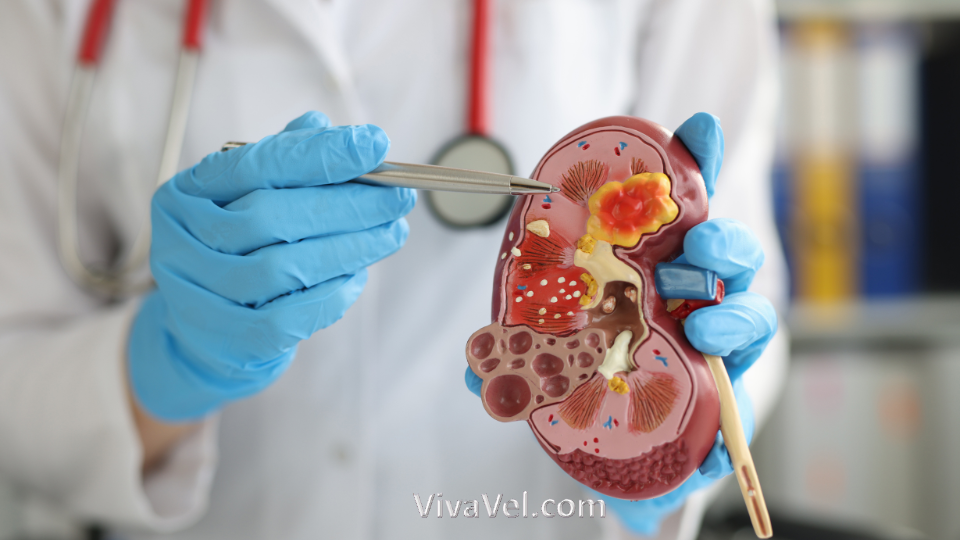
Kidney stones form when there's an imbalance in the substances in your urine, leading to crystallization. Common causes include:
Dehydration: Not drinking enough water.
Diet: High intake of salt, sugar, or protein can increase the risk of stone formation.
Genetics: A family history of kidney stones increases your risk of developing kidney stones.
Medical conditions: Such as obesity, digestive disorders, or infections.
Certain medications: Some medications can increase the risk of complications.
You should seek medical help if you experience any of the following:
Severe pain that won't go away, especially in your back or side
Blood in your urine
Fever and chills (indicating an infection)
Nausea and vomiting
Difficulty passing urine
If you have a known history of kidney stones and suspect you might have another one, it's best to consult a doctor.
You should seek medical help if you experience any of the following:
Severe pain that won't go away, especially in your back or side
Blood in your urine
Fever and chills (indicating an infection)
Nausea and vomiting
Difficulty passing urine
If you have a known history of kidney stones and suspect you might have another one, it's best to consult a doctor.
Several factors can increase your risk of developing kidney stones:
Not drinking enough water
Eating a high-sodium or high-protein diet
Being overweight or obese
Having digestive diseases like Crohn's disease or a history of gastrointestinal surgery
Family history of kidney stones
Certain medications, like calcium-based antacids
Do's:
Drink plenty of water: Aim for at least 2-3 litres a day to stay hydrated.
Eat more fruits and vegetables: They help reduce substances that form stones.
Limit salt intake: A high-sodium diet can increase the risk of kidney stone formation.
Exercise regularly to help maintain a healthy weight and overall well-being.
Don'ts:
Limit oxalate-rich foods: Spinach, nuts, and chocolate can contribute to stone formation.
Avoid excessive animal protein: Consuming too much red meat or poultry can increase the risk.
Don't take calcium supplements unless prescribed: Excess calcium can contribute to stone formation.
Limit sugary and caffeinated drinks: These can cause dehydration and increase the risk of stone formation.
Disclaimer:
Our medical content authors have diligently gathered and synthesized information on this topic to offer valuable insights to our readers. Drawing from a range of reputable medical journals and health resources, this content aims to enhance understanding of the subject. It's essential to remember that while this information is informative, it should not replace personalized consultation or treatment from a qualified healthcare professional. For further details, please refer to our Editorial Policy.
For this topic, our authors used some of the following resources:
Mayo Clinic | Kidney stones - Diagnosis and treatment
Cleveland Clinic | Kidney Stones: Causes, Symptoms, Diagnosis & Treatment
.png)
Saba holds a Master’s degree in Pharmacy from Jamia Hamdard University, New Delhi and possesses a deep understanding of medical subjects. She is an experienced teacher and is passionate about health education. She has a remarkable talent for transforming complex medical concepts into engaging, accurate, and impactful content to inspire healthier living. With a deep scientific understanding and thorough research, Saba consistently supports her writings with the latest publications, ensuring accuracy and relevance.
.png)
Oruge is committed to promoting health awareness through clear, research-based communication. With a background in microbiology and public health, she combines scientific accuracy with an engaging writing style to simplify complex medical topics. At VivaVel Health, she contributes insightful reviews, articles, and blogs that empower readers to make informed decisions for healthier living.




 Apollo Gleneagles Hospital, Kolkata
 58, Canal Circular Road, Kadapara Kolkata, 700054, India
 Ramaiah Memorial Hospital, Bengaluru
M S Ramaiah Nagar, MSRIT Post, Bangalore, Karnataka 560054, India
 Sterling Hospital, Ahmedabad
Sterling Hospital Road near Maharaja Agrasen Vidhyalaya, Memnagar, Ahmedabad, 380052 India
 MGM Healthcare, Chennai
New No 72, Old No 54 Nelson Manickam Road, Aminjikarai Chennai, 600029 India
 Dr. Rela Institute and Medical Centre
No.7, CLC Works Road, Chromepet, Chennai, 600044, India
 Naruvi Hospitals
Chennai - Bengaluru Highway, 72, Collector's Office Rd, Vellore, Tamil Nadu 632004

 Dr. Sujit Kumar Sinha
 Consultant
 Urologist
 14 Years Experience
 Manipal Hospital (E.M. Bypass), Kolkata
Dr. Sujit Kumar Sinha is a prominent Urologist in Kolkata with about 10 years of experience in the field. He has developed expertise in diagnosing and treating variou...
 Book Consultation
 Dr. Mrinal Kanti RoyJunior Consultant
Urologist
9 Years ExperienceManipal Hospital (E.M. Bypass), Kolkata
Dr. Mrinal Kanti RoyJunior Consultant
Urologist
9 Years ExperienceManipal Hospital (E.M. Bypass), Kolkata
Dr. Mrinal Kanti Roy is a renowned Urologist and AVF (Arteriovenous Fistula) Specialist with over 9 years of experience in the field. His expertise spans a varie...
Book Consultation
 Dr. Paresh JainDirector Urology
Urology | Organ Transplant | Kidney Tran...
16 Years ExperienceFortis Escorts Heart Institute
Dr. Paresh JainDirector Urology
Urology | Organ Transplant | Kidney Tran...
16 Years ExperienceFortis Escorts Heart Institute
Dr. Paresh Jain is the director of urology and has over 16 years of rich experience. He specializes in Laparoscopic Urology, Endourology - URS, PCNL, RIRS, TURP, Lase...
Book Consultation
 Dr. Mayank JainConsultant
Urology | Kidney Transplant
15 Years ExperienceFortis Escorts Heart Institute
Dr. Mayank JainConsultant
Urology | Kidney Transplant
15 Years ExperienceFortis Escorts Heart Institute
Dr. Mayank Jain is an Associate Consultant in the Urology and Kidney Transplant department and boasts over 15 years of expertise. He has worked at Max Superspeciality...
Book Consultation
 Dr. Ketan ShuklaChief Transplant Surgeon And Department ...
Urology | Endourology Surgeries | LASER ...
26 Years ExperienceSterling Hospital, Ahmedabad
Dr. Ketan ShuklaChief Transplant Surgeon And Department ...
Urology | Endourology Surgeries | LASER ...
26 Years ExperienceSterling Hospital, Ahmedabad
Dr. Ketan Shukla is a highly esteemed Urologist, Robotic, and Kidney Transplant Surgeon based in Ahmedabad, Gujarat. With over 25 years of diverse experience, he has pioneered...
Book Consultation
 Dr. Ashish SabharwalConsultant
Urologist And Robotic Surgeon
20 Years ExperienceIndraprastha Apollo Hospital
Dr. Ashish SabharwalConsultant
Urologist And Robotic Surgeon
20 Years ExperienceIndraprastha Apollo Hospital
Dr. Ashish Sabharwal is a leading urologist and robotic surgeon in New Delhi, India. With over 20 years of experience, he has established himself as an expert in robo...
Book Consultation
Treatment Plan & Cost within 2 days













 Multiple Myeloma Treatment
 Max Super Speciality Hospital, Vaishali
 Dr. Ashu Kumar Jain